
Reduce Blood Sugar Levels with Ayurveda
Diabetes and blood sugar imbalances are big health problems today. But, Ayurveda, an ancient Indian medicine, has a natural way to manage them. It helps people lower their Reduce Blood Sugar Levels and balance their metabolism.
Ayurveda connects our body, mind, and spirit. It’s different from modern medicine, which just treats symptoms. Ayurveda fixes the problem at its source. It teaches us to eat right, use herbs, and live healthily to control blood sugar.
Key Takeaways
- Ayurveda provides a holistic approach to managing blood sugar levels naturally.
- Ayurvedic principles emphasize the integration of diet, lifestyle, and herbal remedies to achieve balanced glucose control.
- Ayurveda recognizes the interdependence of physical, mental, and spiritual well-being in addressing the root causes of blood sugar imbalances.
- Ayurvedic remedies offer a refreshing perspective on diabetes management, empowering individuals to take an active role in their health.
- Integrating Ayurvedic wisdom with modern medical approaches can lead to comprehensive and sustainable blood sugar control.
Understanding Blood Sugar Imbalances Through Ayurvedic Principles
Ayurveda is an ancient Indian healing system. It offers a unique view on blood sugar imbalances. It looks at the three fundamental energies, or doshas, to understand how our bodies affect blood sugar.
The Three Doshas and Their Impact on Blood Sugar
The three doshas – Vata, Pitta, and Kapha – control many body functions, including glucose. An imbalance in any dosha can cause blood sugar to swing. For example, too much Vata can make blood sugar levels unpredictable. Too much Pitta can lead to insulin resistance.
Knowing your dominant dosha can help you understand your risk for blood sugar issues.
Identifying Your Body Constitution
Finding your Ayurvedic body type, or Prakriti, is key. It helps you see how you might be prone to blood sugar problems. An Ayurvedic expert can look at your physical, mental, and emotional traits. They’ll help you figure out your main dosha and create a plan to balance blood sugar naturally.
Signs of Blood Sugar Imbalance in Ayurveda
- Frequent fatigue or drowsiness
- Excessive thirst and urination
- Unexplained weight changes
- Blurred vision or poor eyesight
- Slow wound healing
- Tingling or numbness in the extremities
Learning about Ayurvedic principles can help you understand diabetes management better. It encourages a holistic approach to managing blood sugar. This knowledge empowers you to take steps towards better blood sugar balance.
Essential Ayurvedic Herbs for Managing Blood Sugar
If you’re looking for natural ways to control your blood sugar, Ayurvedic herbs are a great option. These herbs have been used for centuries to help with diabetes and high blood sugar. Let’s look at some of the best ayurvedic herbs for diabetes and herbal treatments for hyperglycemia.
Gymnema Sylvestre is a well-known Ayurvedic herb for managing blood sugar. It’s a plant that helps your body absorb less glucose, keeping your blood sugar in check. Bitter Melon, or Momordica charantia, is another powerful herb. It acts like insulin, helping to control blood sugar levels.
Fenugreek, or Trigonella foenum-graecum, is a versatile herb. It helps control blood sugar and supports your body’s metabolic functions. Its seeds can improve insulin sensitivity and slow down carb digestion, helping with hyperglycemia.
- Amla (Indian Gooseberry): This fruit is packed with antioxidants and helps keep blood sugar levels healthy.
- Turmeric: Turmeric’s active compound, curcumin, may improve insulin sensitivity and reduce diabetes-related inflammation.
- Cinnamon: This spice has insulin-like properties, making it a good choice for managing diabetes naturally.
While these herbs can help with blood sugar, always talk to an Ayurvedic expert or doctor before using them. They can give you personalized advice and make sure you’re using these herbs safely and effectively.
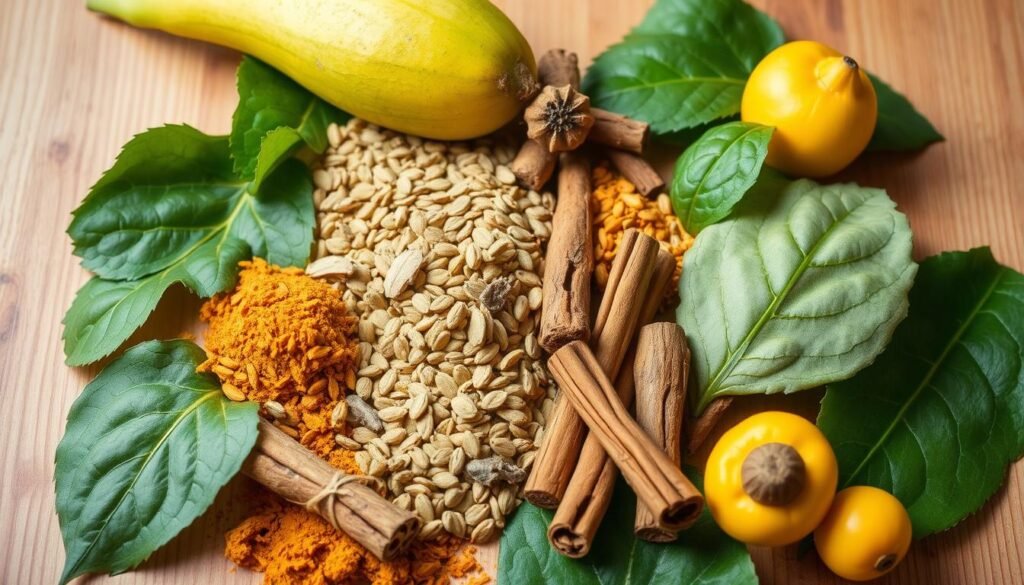
Dietary Guidelines to Reduce Blood Sugar Levels with Ayurveda
Ayurveda is an ancient Indian medicine system. It helps manage blood sugar through diet. By following Ayurvedic food rules, you can control blood sugar and avoid diabetes meds.
Recommended Food Combinations
Ayurveda says balance is key in meals. It’s about mixing tastes like sweet, sour, and bitter. This helps keep blood sugar stable and aids digestion.
- Vegetables (bitter, astringent) with healthy fats (sweet, sour)
- Whole grains (sweet, astringent) with legumes (protein-rich, pungent)
- Spices (pungent, bitter) with starchy vegetables (sweet)
Timing of Meals in Ayurveda
Meal timing matters in Ayurveda. Eat your biggest meal at noon when digestion is best. Have smaller meals in the morning and evening for better nutrient absorption.
Foods to Avoid for Blood Sugar Management
Ayurveda warns against certain foods. These can upset blood sugar. Avoid:
- Refined carbohydrates (white bread, pasta, pastries)
- Sugary beverages (soda, fruit juices)
- Fried and processed foods
- Excess dairy products
By sticking to these Ayurvedic tips, you can manage blood sugar. This way, you might not need blood sugar control remedies or natural alternatives to diabetes medication.
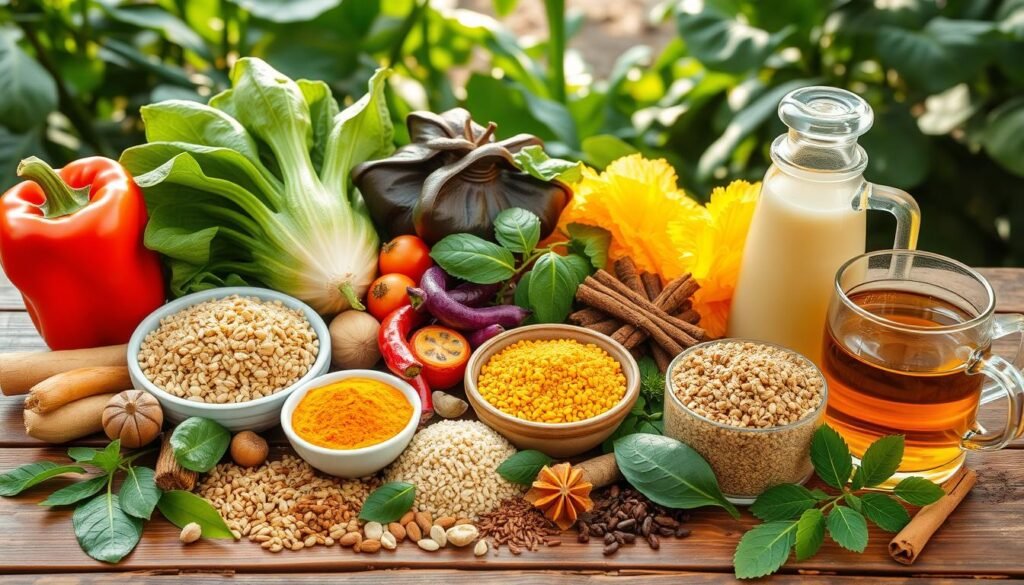
Adding Ayurvedic principles to your diet can help keep blood sugar healthy. It’s a lasting way to stay well.
Lifestyle Modifications for Blood Sugar Control
Managing diabetes is more than just what you eat. Ayurveda teaches us to change our lifestyle to help our body’s health. By making these changes, we can keep our blood sugar in check and feel better for a long time.
Sleep and Stress Management
Good sleep is key to keeping blood sugar stable. Ayurveda suggests sleeping 7-9 hours a night without interruptions. Stress-reducing activities like pranayama and meditation also help lower stress hormones and make insulin work better.
Daily Routines (Dinacharya)
Ayurvedic daily routines, or dinacharya, help keep our body in balance. Activities like oil pulling, tongue scraping, and abhyanga (warm oil massage) boost digestion and circulation. They also help our metabolism work better.
Physical Activity
Staying active is vital for healthy blood sugar. Ayurveda suggests doing yoga, walking, and other exercises that fit your body and energy. These activities improve how well your body uses insulin and keep your metabolism healthy.
| Lifestyle Factor | Ayurvedic Recommendation | Benefits of Blood Sugar |
|---|---|---|
| Sleep | 7-9 hours of uninterrupted sleep per night | Regulates hormones, improves insulin sensitivity |
| Stress Management | Pranayama, meditation, and other relaxation techniques | Reduces cortisol levels, and enhances insulin function |
| Daily Routines (Dinacharya) | Oil pulling, tongue scraping, abhyanga (self-massage) | Supports digestive health and metabolic function |
| Physical Activity | Yoga, walking, and other gentle exercises | Improves insulin sensitivity, promotes weight management |
By following these Ayurvedic lifestyle tips, we can better manage our diabetes and keep our blood sugar balanced naturally.

Therapeutic Ayurvedic Practices for Blood Sugar Balance
Ayurveda is an ancient Indian healing system. It offers a holistic way to manage blood sugar and prevent diabetes complications. Panchakarma treatments and specific yoga poses and breathing exercises are key.
Panchakarma Treatments
Panchakarma is a detox and rejuvenation process in Ayurveda. It cleanses the body of toxins and imbalances that can affect blood sugar. Some Panchakarma therapies for an integrative approach to diabetes care include:
- Basti (herbal enemas) to eliminate excess Vata dosha
- Virechana (purgation) to remove excess Pitta dosha
- Nasya (nasal administration of herbs) to balance Kapha dosha
Yoga Poses for Blood Sugar Management
Certain yoga poses can help manage blood sugar and prevent diabetes complications ayurvedically. Some beneficial poses include:
- Surya Namaskar (Sun Salutation) to improve insulin sensitivity
- Paschimottanasana (Forward Fold) to stimulate the pancreas
- Setu Bandha Sarvangasana (Bridge Pose) to manage stress and cortisol levels
Breathing Exercises (Pranayama)
Pranayama, or controlled breathing, is vital in an integrative approach to diabetes care. Practices like Anuloma Viloma (Alternate Nostril Breathing) and Bhastrika (Bellows Breath) help regulate blood sugar and improve metabolism.
By adding these Ayurvedic therapies to a treatment plan, people can manage their blood sugar well. This helps prevent diabetes complications ayurvedically.
Natural Supplements and Their Role in Blood Sugar Control
Ayurvedic practitioners have long known the power of herbs and supplements for blood sugar control. These natural remedies offer a holistic approach to managing blood sugar levels. They complement modern treatments and address the root causes of blood sugar imbalances.
Triphala, a blend of three fruits, is known for regulating glucose and improving insulin sensitivity. Shilajit, a mineral-rich substance from the Himalayas, has anti-diabetic properties. It helps lower blood sugar and boost insulin production.
Gudmar, or Gymnema Sylvestre, is another remarkable herb. It blocks sweetness taste receptors, helping to control sugar cravings and intake.
- Triphala: Regulates glucose metabolism and improves insulin sensitivity
- Shilajit: Possesses antidiabetic properties, helps lower blood sugar levels, and enhances insulin production
- Gudmar (Gymnema Sylvestre): Blocks taste receptors for sweetness, reducing sugar cravings
- Paneer Phool may help produce red blood cells and control the metabolism process.
These natural remedies, rooted in Ayurveda, offer a promising way to manage diabetes or prediabetes. By adding these supplements to their routine, people can enhance their conventional treatments. This approach supports better blood sugar balance and overall health.
“The true medicine of the future will not be a pill, but a lifestyle.” – Dr. Vasant Lad, leading Ayurvedic physician
Integrating Modern Medicine with Ayurvedic Treatments
More people are looking for a new way to handle diabetes. They mix Ayurvedic wisdom with modern medicine. This mix helps manage diabetes in a more complete way. It tackles the disease’s roots and uses the strengths of both old and new treatments.
Complementary Approaches
Ayurvedic remedies can team up with regular treatments for diabetes. Some ways to do this include:
- Using Ayurvedic herbs like Gymnema Sylvestre and Cinnamon to control blood sugar.
- Doing Yoga and meditation to lower stress and boost health.
- Going for Ayurvedic detox (Panchakarma) to clean the body and balance it out.
- Eating foods that follow Ayurvedic rules helps digestion and metabolism.
When to Seek Professional Help
Ayurvedic methods are great as a supplement to modern diabetes care. But, it’s key to work with doctors. An integrative approach to diabetes care and holistic diabetes management needs teamwork. This way, a plan can be made that fits the person’s needs perfectly.
“The mix of Ayurvedic and modern medicine helps tackle diabetes in a full way. This leads to better and more effective care.”
By going for this mix, people can take charge of their diabetes care. This can lead to better health and happiness.
Success Stories and Clinical Evidence
Ayurveda, an ancient Indian system, is known for managing health issues like diabetes. Many success stories and studies show Ayurvedic remedies work well. They help lower blood sugar and boost the well-being of those with diabetes.
Mehul Desai, a 48-year-old man, had type 2 diabetes for almost 10 years. He tried many treatments but nothing worked. An Ayurvedic practitioner helped his with herbs, diet changes, and lifestyle tweaks. In 6 months, Mehul Desai’s blood sugar dropped, and he no longer needed meds.
A study in the Journal of Ayurveda and Integrative Medicine involved 80 people with prediabetes. They were split into two groups. One got Ayurvedic treatment, the other standard care. The Ayurvedic group saw bigger drops in blood sugar and better insulin use.
“Ayurveda has given me a natural way to manage my diabetes. I feel healthier, more energized, and in control of my condition.”
– *Mehul Desai, Ayurvedic Success Story*
These stories and studies show Ayurveda’s power in managing diabetes. It offers a natural way to control blood sugar. This approach can help people reduce their need for traditional medicines and live better lives.
Conclusion
In this guide, we’ve looked at how Ayurveda can help manage blood sugar. We’ve seen how the three doshas affect blood sugar levels. This helps people understand their bodies better and what signs they might be seeing.
We’ve talked about important Ayurvedic herbs, foods, and lifestyle changes for blood sugar control. This includes Panchakarma treatments, yoga, and breathing exercises. We’ve also covered the use of natural supplements. This guide offers a complete plan for lowering blood sugar levels with Ayurveda and managing holistic diabetes.
By mixing Ayurveda with modern medicine, people can create a detailed plan for their blood sugar issues. We suggest talking to an Ayurvedic expert to find the best approach for you. Always put your health first as you work towards balanced blood sugar levels.
FAQ
What are the key Ayurvedic herbs for managing blood sugar levels?
Key Ayurvedic herbs for blood sugar control include Gymnema Sylvestre, Bitter Melon, and Fenugreek. Cinnamon and Turmeric also play a role. These herbs help improve insulin sensitivity and reduce glucose absorption.
How does Ayurveda approach the management of diabetes and hyperglycemia?
Ayurveda sees diabetes as an imbalance in the body’s energies. It aims to restore balance through diet, herbs, lifestyle changes, and Panchakarma. This holistic approach treats the root causes, not just symptoms.
What are the recommended dietary guidelines in Ayurveda for managing blood sugar levels?
Ayurveda suggests avoiding refined carbs and eating high-fiber, low-glycemic foods. It also recommends balancing the six tastes in meals. This helps manage blood sugar.
How can Ayurvedic lifestyle modifications help with blood sugar control?
Ayurveda promotes daily routines and stress management for blood sugar control. It suggests consistent sleep, exercise, yoga, and meditation. Oil massage is also recommended.
What are some of the Ayurvedic therapeutic practices that can aid in blood sugar balance?
Practices like Panchakarma, yoga, and breathing exercises help manage blood sugar. They target metabolic health and insulin production.
How can Ayurvedic approaches be integrated with modern medical treatments for diabetes?
Ayurvedic and modern medicine can work together for diabetes management. Ayurvedic methods support conventional treatments and reduce medication side effects. Always consult healthcare professionals when combining Ayurvedic practices with medication.

